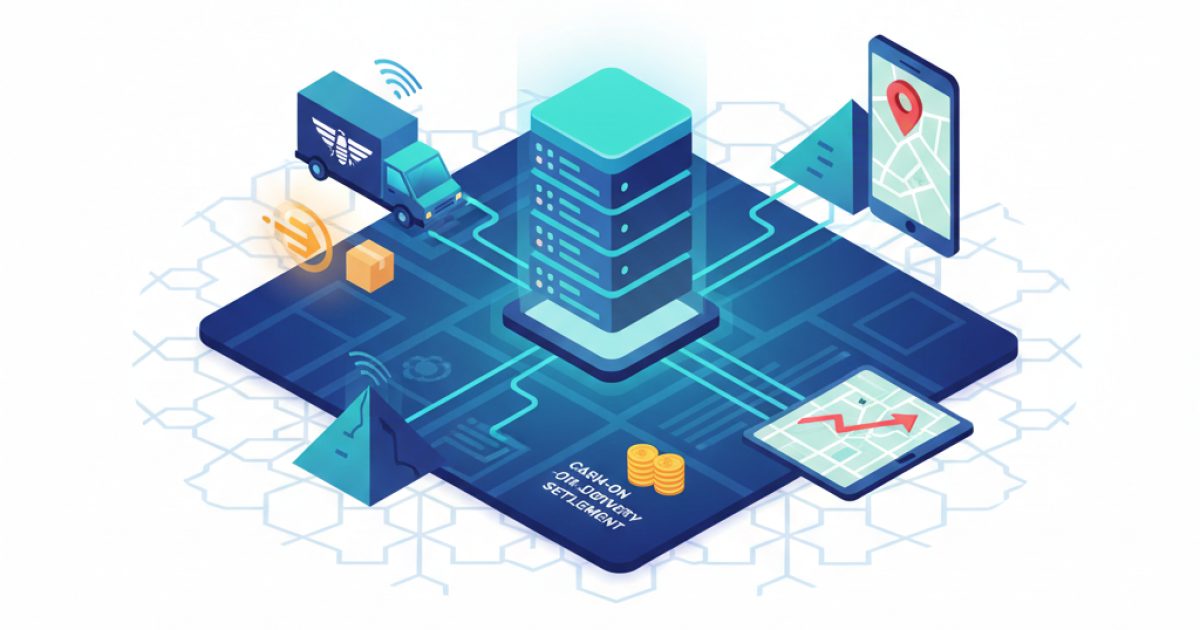
A small delivery company can run on phone calls, a spreadsheet and a group chat. Then volume grows. Merchants ask where their parcels are, couriers return with cash that nobody can reconcile, and the operations team spends the day answering the same questions. At that point software stops being optional. We built the Narmar Express Shipping Platform for exactly this situation: a courier and last-mile delivery platform for Egypt that connects merchants, couriers and operations. This article describes what growing delivery companies should look for.
The workflow software must cover
Whatever the size of the company, the same flow repeats: a merchant books a shipment, operations assigns it, a courier collects and delivers it, the customer pays or receives it, and the money is settled afterwards. Each step creates information that someone downstream needs.
Booking and intake
Merchants need a simple way to create shipments, one at a time or in bulk through a spreadsheet upload. The system should validate addresses and phone numbers at entry, because errors here cause failed deliveries later. Merchant accounts, price lists and contract terms should be stored in the system, so quotes and invoices are consistent.
Dispatch and assignment
Operations staff need a clear board showing new, assigned, in-transit, delivered and failed shipments. Group by zone or route, assign in batches, and rebalance when a courier is unavailable. As volume grows, rules for automatic assignment save hours every day.
Live tracking and status updates
Merchants and receivers want to know where a shipment is without calling. Status updates from couriers should flow to a tracking page and, where appropriate, to notifications by SMS or WhatsApp. Fewer status calls means a smaller support team for the same volume.
A courier app that works on real streets
Couriers are the most important users and often the most neglected. The app should work on modest phones and patchy connections, show the day's list in a sensible order, and let couriers update status with a few taps. Useful features include scanning a barcode, capturing a signature or photo as proof of delivery, recording a reason for failed delivery, and calling the receiver with one tap. Our platform includes a courier app for exactly this daily workflow.
Cash on delivery and settlement
In Egypt, cash on delivery is a core payment method, and it is where many logistics businesses lose money through mistakes and disputes. Software should record the amount to collect on each shipment, the amount the courier actually collected, and the status of each cash handover. At the end of each day or shift, the system should show what each courier owes, and later what the company owes each merchant after fees.
- Record collected amounts at the moment of delivery.
- Reconcile courier cash against deliveries at handover.
- Generate merchant statements with shipment fees and returns deducted.
- Keep a clear history of adjustments with the user who made them.
Reporting that operations can use
Good reports answer daily questions without exporting to a spreadsheet. Look for delivery success rate, failed delivery reasons, average delivery time by zone, courier performance, outstanding cash by courier and merchant, and shipment volume by client. These figures reveal where service quality or cost is slipping.
An assistant for operators
As the number of shipments grows, operators spend time searching and answering questions. The Narmar Express platform includes an AI assistant for operators, which helps them find information and handle routine requests faster. We recommend introducing assistants only once the underlying data is reliable, since an assistant is only as good as the records behind it.
Technical foundations that matter as you scale
- Background processing for notifications, imports and statements, so the interface stays fast at peak hours.
- Role-based access separating merchants, couriers, dispatchers, finance and administrators.
- Audit logs for status changes and money movements.
- An API so merchants with online stores can create shipments automatically and receive status updates.
- Mobile-first design for couriers and merchants, with an installable web app as an option.
Buy, build or combine?
Generic delivery software may cover standard flows but struggle with local needs such as zone-based pricing, cash-on-delivery settlement rules and Arabic interfaces. Custom platforms cost more up front but fit how your company actually works, and they can become a competitive advantage. A phased approach works well: begin with booking, tracking and the courier app, then add settlement, merchant integrations and automation as volume grows.
If you run or plan a delivery company and want to replace spreadsheets with a platform designed for your operations, the Narmar team would be glad to talk. See the Narmar Express project, our services, or contact us.