Almost every software project starts with the same question: do we buy something that already exists, or build something that fits us exactly? Both answers are correct for some companies and expensive mistakes for others. The goal of this article is to give you a way to decide that does not depend on a vendor's sales pitch, including ours.
What off-the-shelf software does well
A packaged product is the right default when your process looks like everyone else's. Accounting, payroll, email and basic project tracking are solved problems. Off-the-shelf tools are usually live within days, they have documentation and a user community, and the vendor carries the cost of security patches and new features.
The trade-off is that you adapt to the product. You accept its data model, its screens and its release schedule. For commodity processes that is a good deal, because nobody gains a competitive edge from a slightly different invoice screen.
When custom software pays off
Custom development makes sense when the way you work is part of what makes your business different. Three signals come up again and again in our conversations with clients.
Your workflow does not fit the package
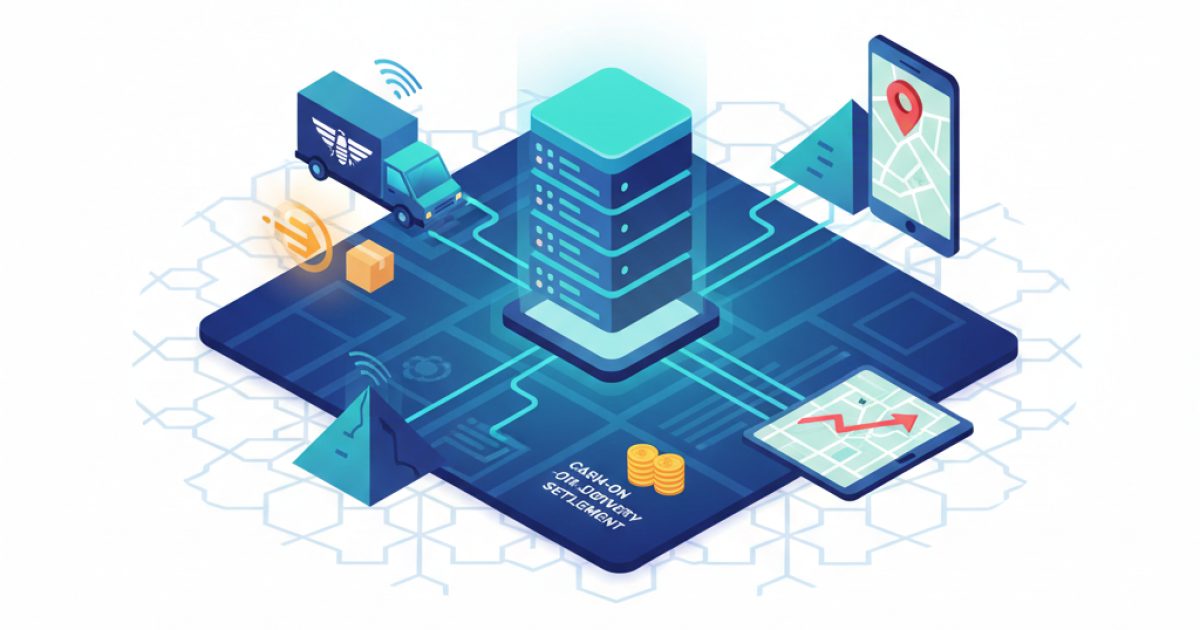
If your team keeps a parallel spreadsheet next to the system, or staff spend time re-typing data between tools, the software is not matching the work. A shipping company that settles cash-on-delivery with couriers every evening, for example, has needs that a generic CRM was never designed around. That is one reason we built the Narmar Express Shipping Platform around booking, live tracking, courier apps and cash-on-delivery settlement rather than adapting a general tool.
You need to own the roadmap
With a subscription product you wait in line for features. With custom software you decide what ships next, and you are not exposed to a vendor changing pricing or discontinuing a plan.
Integration is the real work
When the system must talk to your payment provider, your warehouse devices, your WhatsApp channel and the tax authority, the integration layer is usually larger than the core application. Building that layer once, in code you control, can be cheaper than paying for connectors across several products.
Compare the real costs, not just the first invoice
The price tag on day one is misleading in both directions. Packaged software looks cheap until you count per-user licences, add-ons and workarounds. Custom software looks expensive until you count what you stop paying for. A fair comparison looks at three to five years.
| Factor | Off-the-shelf | Custom |
|---|---|---|
| Time to first use | Days to weeks | Weeks to months |
| Fit to your process | Partial, with workarounds | Exact, by design |
| Ongoing cost | Recurring licences, often per user | Hosting and maintenance you control |
| Ownership of data and code | Vendor decides the terms | You own both |
| Main risk | Lock-in and feature gaps | Scope creep and poor delivery |
The hybrid path most companies end up on
The choice is rarely all or nothing. A sensible pattern is to buy what is generic and build what is distinctive. Use a proven product for accounting or email, and build the customer portal, the pricing engine or the field-service app that sets you apart. Connect them through APIs so that either side can be replaced later.
This is also how we approach our own Narmar POS & ERP suite: a single system with accounting, inventory, CRM, manufacturing and repair modules, so a retailer is not forced to stitch five products together.
A checklist for making the call
Before you sign anything, answer these questions honestly with the people who will use the system.
- Can we describe our process on one page, and does a product on the market match most of it without heavy customisation?
- Which parts of this workflow give us an advantage over competitors, and which are just administration?
- How many users will we have in three years, and what will licences cost at that size?
- Can we export all of our data, at any time, in an open format?
- Who will maintain the system after launch, and do we have a named owner on our side?
- What happens to the business if the vendor, or the development team, disappears?
If most answers point to a standard process and a small team, buy. If they point to a distinctive process, heavy integration or growth that makes licences expensive, build, or at least build the distinctive part.
Whatever you pick, protect yourself. For packaged software, run a paid pilot with real data before committing to a multi-year contract. For custom software, insist on a short discovery phase, a written scope, working software every few weeks and full ownership of the source code. Honest estimates and transparent pricing matter more than the lowest quote.
If you are weighing the two options for your own company, talk to the Narmar team. We will tell you plainly when a ready-made product is the better answer, and when it is worth building. Start from our services page or contact us for a short discovery call.