Most ERP projects are approved on a promise: better control, fewer errors, faster reporting. A year later, nobody can say whether the promise was kept, because nobody wrote down what things looked like before. Measuring return on investment is not complicated, but it has to be planned before the first screen is built. This guide shows how we approach it with clients.
Start with a baseline
You cannot measure improvement without a starting point. Before kickoff, record how the business runs today, using numbers your team already trusts. Do not wait for perfect data; a rough, honest baseline is far better than none.
Good baseline measures are simple and tied to everyday work:
- Hours spent each month on manual reporting and reconciliation.
- Time from the end of the month to a closed set of accounts.
- Stock count differences between the system and the shelf.
- Time to create a quotation, invoice or purchase order.
- Number of corrections, credit notes or returns caused by data errors.
Separate costs from benefits
Count the full cost
The invoice from the vendor is only part of the investment. Include data migration, integration with existing tools, training time for staff, hardware or hosting, and the internal hours your own team spends on workshops and testing. Add the recurring costs too: support, hosting, updates and licences if any.
Group the benefits
Benefits fall into four useful groups, and it helps to keep them separate so that you do not claim the same gain twice.
- Time saved. Work that no longer needs to be done by hand. Convert it to money only if the time is actually redeployed or a hire is avoided.
- Money protected. Fewer stock-outs, less shrinkage, fewer billing errors, better collection of receivables.
- Money earned. Faster quotations, better customer service and more reliable delivery can lead to repeat business, but be conservative when you attribute revenue to software.
- Risk reduced. Cleaner audit trails, role-based access and tax-compliant invoicing reduce the cost of mistakes.
Pick a small set of leading indicators
Do not track fifty numbers. Choose five to eight measures that reflect the reasons you started the project, and review them monthly. For a retailer or distributor these might be inventory accuracy, days of stock on hand and invoice turnaround. For a contractor they might be equipment utilisation, fuel variance and time to approve a purchase.
These are the kinds of problems our Earth Movers ERP addresses by tying equipment, fuel, work orders, production, inventory, procurement, payroll and accounting together in one system, and our Narmar POS & ERP addresses for retail and restaurants with accounting, inventory and CRM modules. When data lives in one place, indicators like these stop being a monthly spreadsheet exercise.
Allow for the adoption curve
Return rarely appears on go-live day. Staff are slower at first, old habits persist, and some data needs cleaning. Plan for three phases and set expectations with your board accordingly.
Months one to three: stabilise
Expect dips in productivity. Measure adoption rather than savings: how many users log in, how many transactions still happen outside the system.
Months three to nine: improve
The first genuine gains show up here, in faster closing, cleaner stock figures and fewer errors. Compare against the baseline every month.
After nine months: optimise
Once the basics are reliable, look for new gains: automation, better reports, integration with e-commerce or logistics, and AI-based insights that rely on clean history.
A simple way to calculate ROI
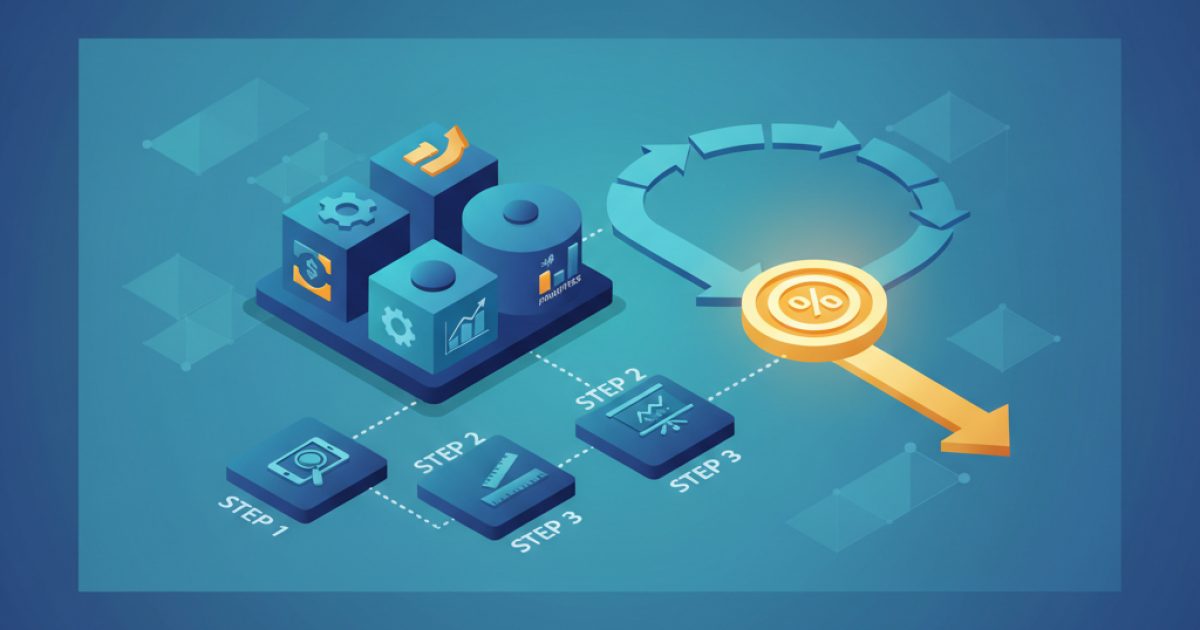
Add up the measured annual benefit, subtract the annual cost of running the system, and divide by the total investment. Present the result as a range with the assumptions written next to it. A board trusts a modest, documented figure more than a spectacular, unexplained one.
If a benefit cannot be tied to a baseline measure, do not put it in the business case.
Common mistakes
- Declaring success on go-live day instead of after several months of use.
- Counting saved hours as savings when nobody changed how that time is used.
- Skipping the baseline because the data is imperfect.
- Forgetting training and data migration in the cost.
If you are planning an ERP project and want a clear business case before you commit, the Narmar team can help you define the baseline and the metrics during a short discovery phase. See our services or get in touch.